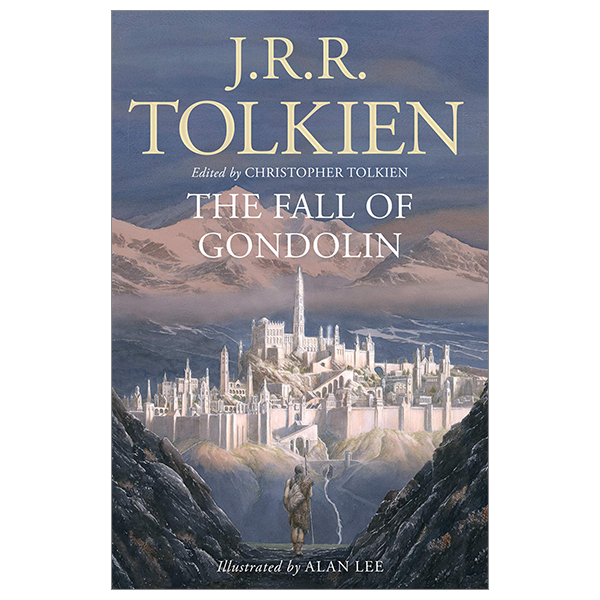
The Fall Of Gondolin Painstakingly restored from Tolkien's manuscripts and presented for the first time as a standalone work, the epic tale of The Fall of Gondolin will reunite fans of The Hobbit and The Lord of the Rings with Elves and Men, Balrogs, Dragons and Orcs and the rich landscape and creatures unique to Tolkien's Middle-earth. In the Tale of The Fall of Gondolin are two of the greatest powers in the world. There is Morgoth of the uttermost evil, unseen in this story but ruling over a vast military power from his fortress of Angband. Deeply opposed to Morgoth is Ulmo, second in might only to Manwe, chief of the Valar. Central to this enmity of the gods is the city of Gondolin, beautiful but undiscoverable. It was built and peopled by Noldorin Elves who, when they dwelt in Valinor, the land of the gods, rebelled against their rule and fled to Middle-earth. Turgon King of Gondolin is hated and feared above all his enemies by Morgoth, who seeks in vain to discover the marvellously hidden city, while the gods in Valinor in heated debate largely refuse to intervene in support of Ulmo's desires and designs. Into this world comes Tuor, cousin of Turin, the instrument of Ulmo's designs. Guided unseen by him Tuor sets out from the land of his birth on the fearful journey to Gondolin, and in one of the most arresting moments in the history of Middle-earth the sea-god himself appears to him, rising out of the ocean in the midst of a storm. In Gondolin he becomes great; he is wedded to Idril, Turgon's daughter, and their son is Earendel, whose birth and profound importance in days to come is foreseen by Ulmo. At last comes the terrible ending. Morgoth learns through an act of supreme treachery all that he needs to mount a devastating attack on the city, with Balrogs and dragons and numberless Orcs. After a minutely observed account of the fall of Gondolin, the tale ends with the escape of Tuor and Idril, with the child Earendel, looking back from a cleft in the mountains as they flee southward, at the blazing wreckage of their city. They were journeying into a new story, the Tale of Earendel, which Tolkien never wrote, but which is sketched out in this book from other sources. Following his presentation of Beren and Luthien Christopher Tolkien has used the same 'history in sequence' mode in the writing of this edition of The Fall of Gondolin. In the words of J.R.R. Tolkien, it was 'the first real story of this imaginary world' and, together with Beren and Luthien and The Children of Hurin, he regarded it as one of the three 'Great Tales' of the Elder Days.

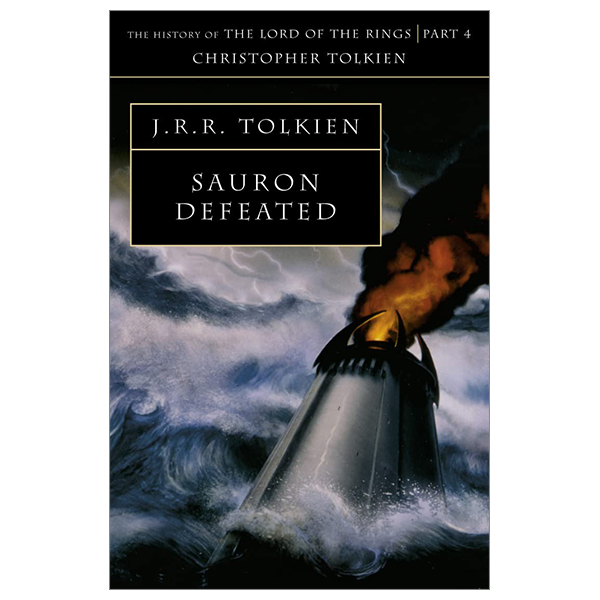
Sauron Defeated The final part of The History of The Lord of the Rings, an enthralling account of the writing of the Book of the Century which contains many additional scenes and includes the unpublished Epilogue in its entirety. In the first section of Sauron Defeated Christopher Tolkien completes his fascinating study of The Lord of the Rings. Beginning with Sam's rescue of Frodo from the Tower of Cirith Ungol, and giving a very different account of the Scouring of the Shire, this section ends with versions of the hitherto unpublished Epilogue, in which, years after the departure of Bilbo and Frodo from the Grey Havens, Sam attempts to answer his children's questions. The second section is an edition of The Notion Club Papers. These mysterious papers, discovered in the early years of the twenty-first century, report the discussions of an Oxford club in the years 1986-7, in which after a number of topics, the centre of interest turns to the legend of Atlantis, the strange communications received by other members of the club from the past, and the violent irruption of the legend into the North-west of Europe. This series of fascinating books has now been repackaged to complement the distinctive and classic style of the 'black cover' A-format paperbacks of The Hobbit, The Lord of the Rings, The Silmarillion and Unfinished Tales.

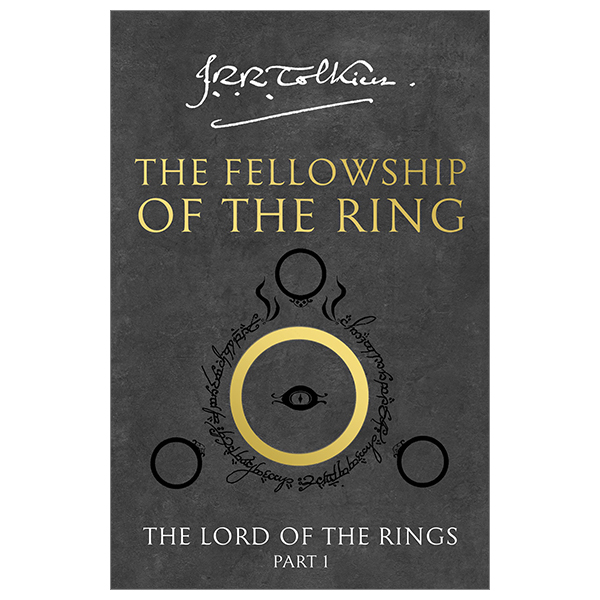
The Fellowship Of The Ring: The Lord Of The Rings (Part 1) Continuing the story begun in The Hobbit, this is the first part of Tolkien's epic masterpiece, The Lord of the Rings, featuring a striking black cover based on Tolkien's own design, the definitive text, and a detailed map of Middle-earth. Sauron, the Dark Lord, has gathered to him all the Rings of Power - the means by which he intends to rule Middle-earth. All he lacks in his plans for dominion is the One Ring - the ring that rules them all - which has fallen into the hands of the hobbit, Bilbo Baggins. In a sleepy village in the Shire, young Frodo Baggins finds himself faced with an immense task, as his elderly cousin Bilbo entrusts the Ring to his care. Frodo must leave his home and make a perilous journey across Middle-earth to the Cracks of Doom, there to destroy the Ring and foil the Dark Lord in his evil purpose. Now published again in B format, J.R.R. Tolkien's great work of imaginative fiction has been labelled both a heroic romance and a classic fantasy fiction. By turns comic and homely, epic and diabolic, the narrative moves through countless changes of scene and character in an imaginary world which is totally convincing in its detail.

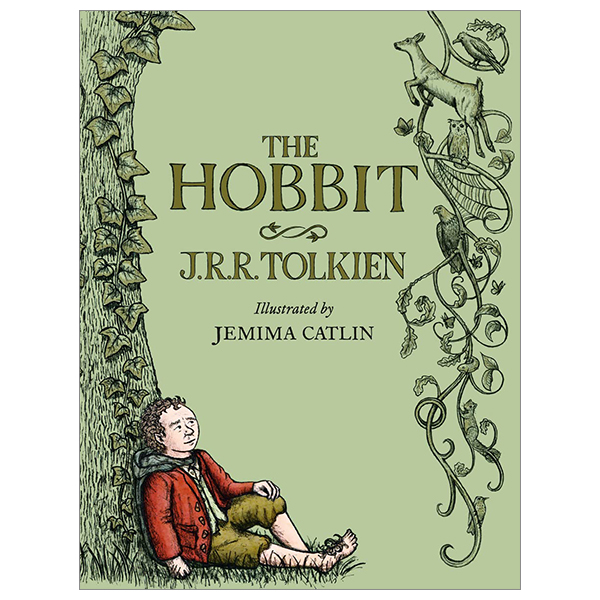
The Hobbit is the unforgettable story of Bilbo, a peace-loving hobbit, who embarks on a strange and magical adventure. A timeless classic. Bilbo Baggins enjoys a quiet and contented life, with no desire to travel far from the comforts of home; then one day the wizard Gandalf and a band of dwarves arrive unexpectedly and enlist his services - as a burglar - on a dangerous expedition to raid the treasure-hoard of Smaug the dragon. Bilbo's life is never to be the same again. Seldom has any book been so widely read and loved as J. R.R. Tolkien's classic tale, 'The Hobbit'. Since its first publication in 1937 it has remained in print to delight each new generation of readers all over the world, and its hero, Bilbo Baggins, has taken his place among the ranks of the immortals of fiction.

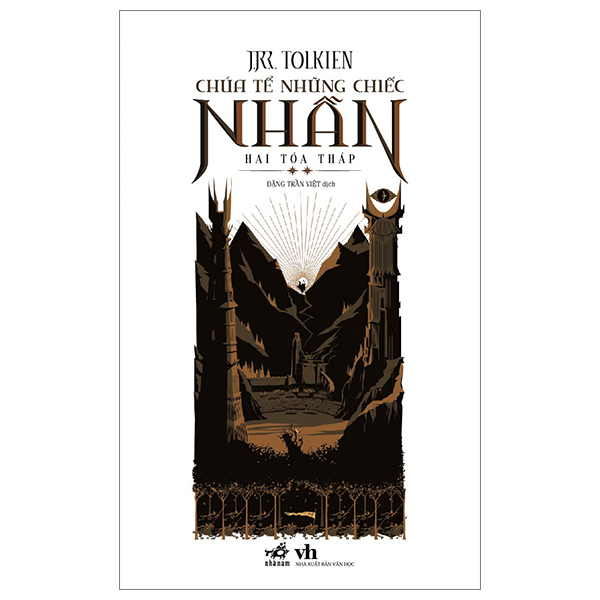
Chúa Tể Những Chiếc Nhẫn - Tập 2 - Hai Tòa Tháp Phần Thứ Hai Tập đại thành Tiểu thuyết kỳ ảo của J.R.R. Tolkien __________________________________ Chín Bộ Hành còn Bảy. Một con đường chia hai. Người Mang Nhẫn dấn thân vào Vùng Đất Đen cùng bạn đường trung nghĩa và kẻ dẫn đường bất trắc. Hai Hobbit bị cướp đi giữa ba phe Orc, để Ba Thợ Săn làm nên kỳ tích đuổi theo. Và một giống dân cổ xưa bừng tỉnh, hai tòa tháp xuất quân, một đất nước Con Người tập hợp binh mã đương đầu với ngoại xâm. Đại Nhẫn Chiến đã bắt đầu ở Trung Địa.

Phần Thứ Ba - Tập đại thành Tiểu thuyết kỳ ảo - của J.R.R. Tolkien Mọi ngả đường dồn dập về một đích. Những thề xưa lần lượt được làm tròn. Các chàng Hobbit thấy mình làm nên truyền thuyết. Và khi cổng Kinh Thành đổ sụp trước quân thù, cũng là lúc Nhà Vua trở về trên chiến địa. Giữa bùi ngùi và hân hoan, giữa tái ngộ và ly biệt, cùng hoa nở sân Thượng Triều và buồm giong từ Cảng Xám, Kỷ Đệ Tam khép lại cho thời Con Người Thống Trị bắt đầu.

Danh pháp trong Chúa tể những chiếc Nhẫn kèm theo danh mục đối chiếu tên riêng Việt-Anh Tài liệu “Danh pháp trong Chúa tể những chiếc Nhẫn” (“Nomenclature of The Lord of the Rings”) do J. R. R. Tolkien biên soạn vào năm 1967! Một nguồn tham khảo đáng-tham-khảo để đọc Chúa tể những chiếc nhẫn.

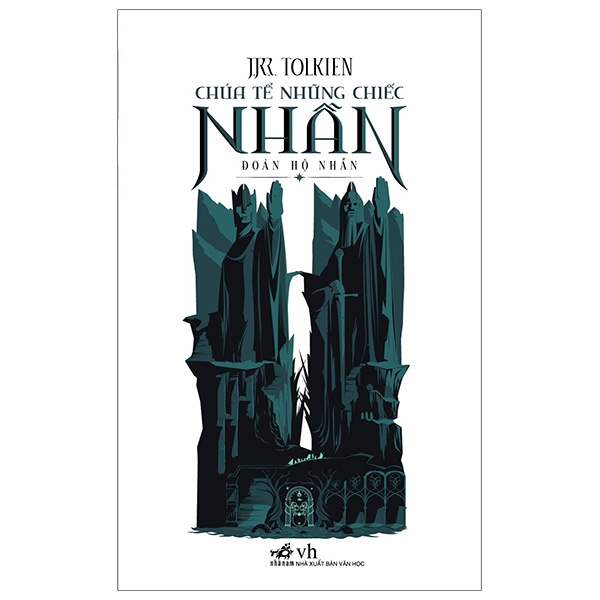
Phần Thứ Nhất - Tập đại thành Tiểu thuyết kỳ ảo của J.R.R. Tolkien Kỷ Đệ Nhất, các Valar kết liễu Morgoth. Kỷ Đệ Nhị, Tiên và Người đánh bại Sauron. Và nay, giữa Kỷ Đệ Tam tưởng đã hòa bình, báu vật của Sauron lại ngóc đầu trong lòng núi. Và thêm một anh chàng Hobbit bỗng thấy mình từ biệt tổ ấm yên bình, dấn vào cuộc phiêu lưu mỗi bước lại thêm xa, thêm gian nan, thêm hệ trọng. Bên cậu sát cánh Đoàn Hộ Nhẫn, Con Người cùng Phù Thủy, Tiên với Người Lùn, vượt đèo cả đầm sâu, qua rừng vàng mỏ tối, vào sinh ra tử hòng lần nữa cứu Trung Địa khỏi rơi vào tay CHÚA TỂ NHỮNG CHIẾC NHẪN. *********** Nhận định “Cộng đồng Anh ngữ được phân làm hai: những người đã đọc Anh chàng Hobbit cùng Chúa tể những chiếc nhẫn, và những người sẽ đọc.” - Sunday Times “Tín đồ Thiên Chúa giáo chưa đọc hết Kinh thánh còn có thể tạm tha thứ, chứ một fan tiểu thuyết kỳ ảo mà chưa đọc cuốn phúc âm của thể loại kỳ ảo này thì không thể chấp nhận được.” - Amazon.com “Tolkien may mắn được ban tặng tài đặt tên chính xác và con mắt quan sát diệu kỳ; kết thúc cuốn I, bạn đọc đã nắm rõ lịch sử Hobbit, người Tiên, Người Lùn cùng sông núi quê hương họ chẳng kém gì nắm rõ xứ sở tuổi thơ mình. Và nếu nhìn nhận một câu chuyện kỳ ảo là nghiêm túc, ai cũng phải thấy rằng dù bề ngoài trình bày những nhân vật và sự kiện khác xa thế giới ta đang sống, đấy vẫn là tấm gương soi hiện thực duy nhất mà ta biết: hiện thực của chúng ta.” - W. H. Auden